Crockfords Casino: History of London's Most Famous Casino
· Updated March 2026
We take a look back at one of London's most famous casinos
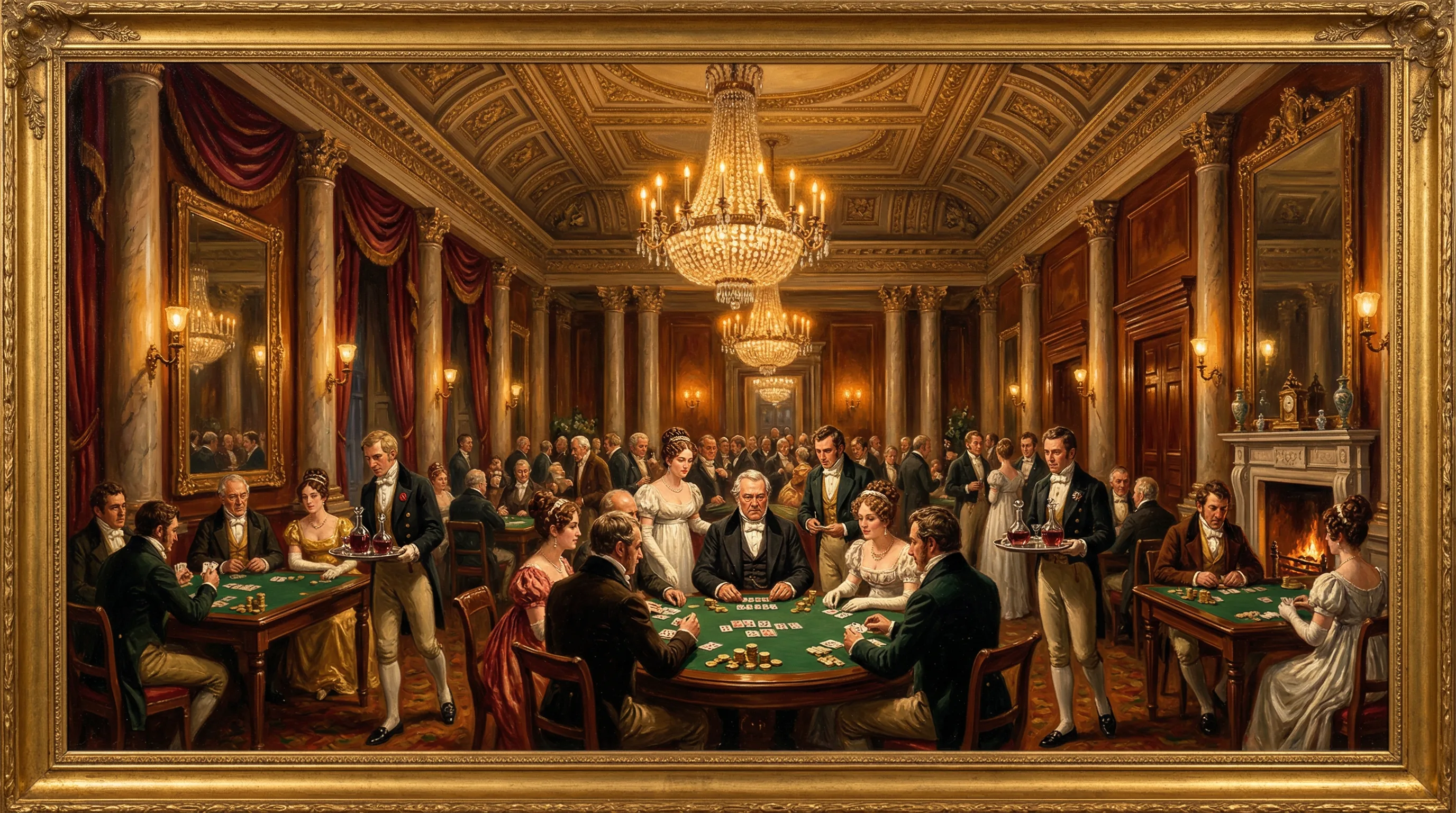
When William Crockford established his casino at 50 St James Place in the ever-fashionable London clubland he probably had no idea his enterprise would still be flourishing in the 21st century under Malaysian ownership - though we think he'd probably approve if he were to visit the club today.
Granted, it no longer stands on its original site - but it's only a stone's throw away across Piccadilly at Curzon Street in the heart of Mayfair and it's still mostly attracting the kind of clientele that Crockford liked to entertain, albeit minus most of the aristocratic element.
There are, however, some crucial operational differences. Back in the day, Crockford liked to cheat his customers.
Heads I win, tails you lose...
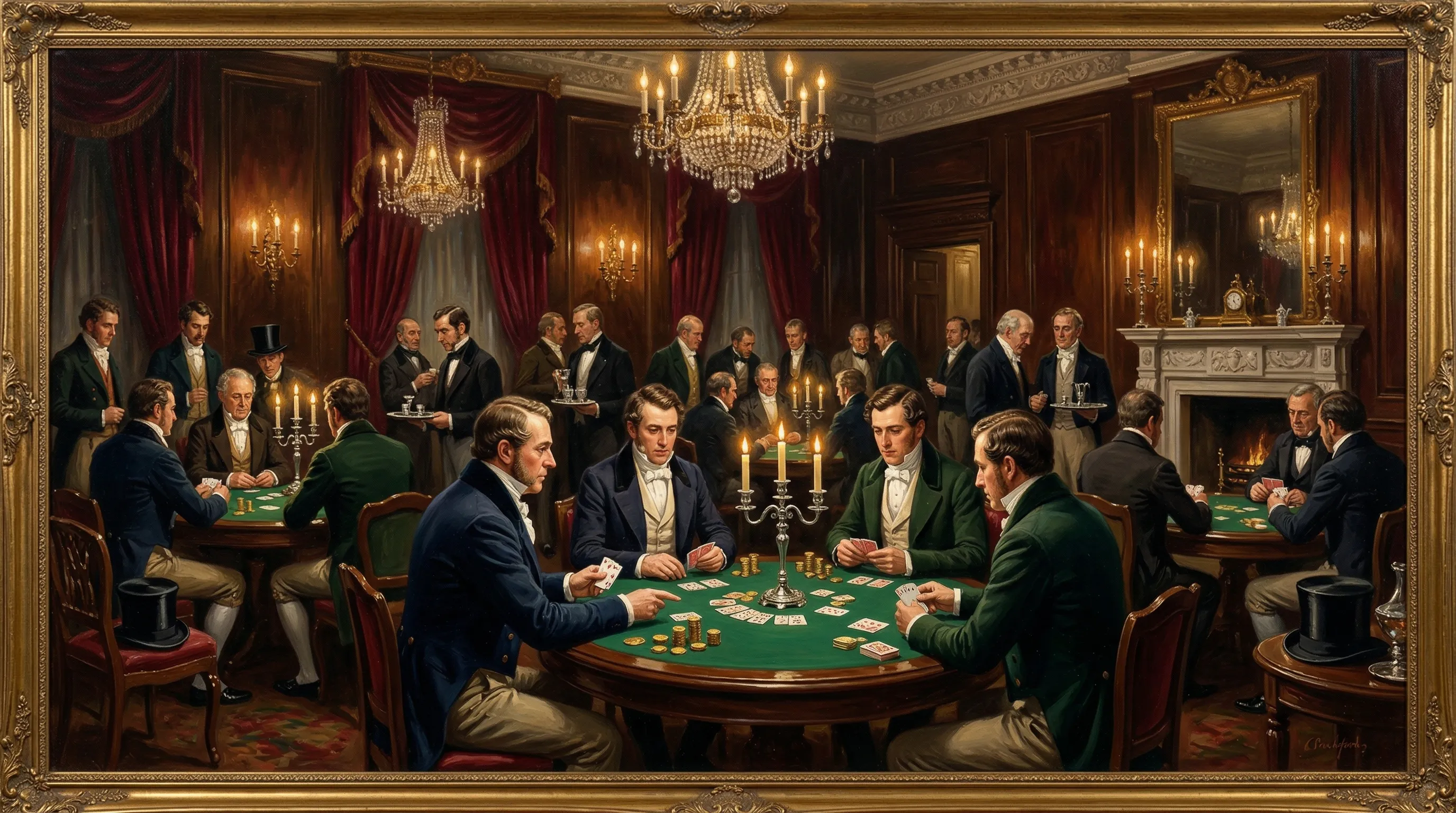
For a man coming from a relatively humble background he was an unlikely character to be laying on games for the landed gentry in Regency London, but the son of a fishmonger made good had a huge asset in that he was an expert gambler.
He had spent years honing his craft in the gambling dens of London and was extraordinarily good at probability, able to work out the odds on any given hand or spin of a wheel with remarkable accuracy. He was also, it has to be said, something of a rogue.
His first venture was a gaming house in Westminster, which he ran with a partner named Taylor. The pair of them made a considerable amount of money, though the methods they used to win were not always strictly above board.
The club at 50 St James was a different proposition entirely, however. This was a first-class establishment in every sense of the word, with the finest cuisine in London, the best wine cellar in the city and a gaming floor that put every other establishment in the capital to shame.
Crockford employed some of the best chefs in Europe, including the legendary Ude who had previously worked for Napoleon, and the menu was said to be the finest in London. The wine list was equally impressive, and members were offered every conceivable luxury.
But behind all this luxury lay the iron determination of a man who knew exactly what he was doing. The games were rigged in the house's favour, the cards were marked, and the croupiers were all in on it. Crockford was running a very successful con, and the aristocracy of Regency London were falling for it hook, line and sinker.
The fortune built on other men's losses
By the time he retired in 1840, Crockford had amassed a fortune of over £1.2 million – an extraordinary sum in those days. He bought a mansion on Carlton House Terrace and spent his final years as a country gentleman, far removed from the gaming tables that had made him rich.
The club closed on his death in 1844 and the building was sold to the Army and Navy Club. It was not until 1928 that the Crockfords name was revived, this time as a bridge club on the same Curzon Street address it occupies today.
From bridge the club expanded into casino games, adding Chemin de Fer, Roulette and Blackjack, and gradually built up the reputation for exclusivity and high stakes play that it enjoys to this day.
The Genting era
In 1971 the club was acquired by Genting, the Malaysian gaming giant that now owns a string of premium UK casinos. Under Genting's ownership the club has been extensively refurbished and now offers a gaming experience that is second to none in London.
The decor is understated and elegant, the staff impeccably trained and the games are conducted with the kind of quiet efficiency that you'd expect from one of the world's leading casino operators. There's Roulette, Blackjack, Baccarat and Three Card Poker on offer, along with electronic Roulette terminals for those who prefer a faster pace.
In 2012 poker legend Phil Ivey played Baccarat here and won £7 million; the win was disputed in the casino's favour as the technique he used – known as Edge Sorting – was deemed an illegitimate strategy. The story became one of the most talked-about casino controversies of the modern era.