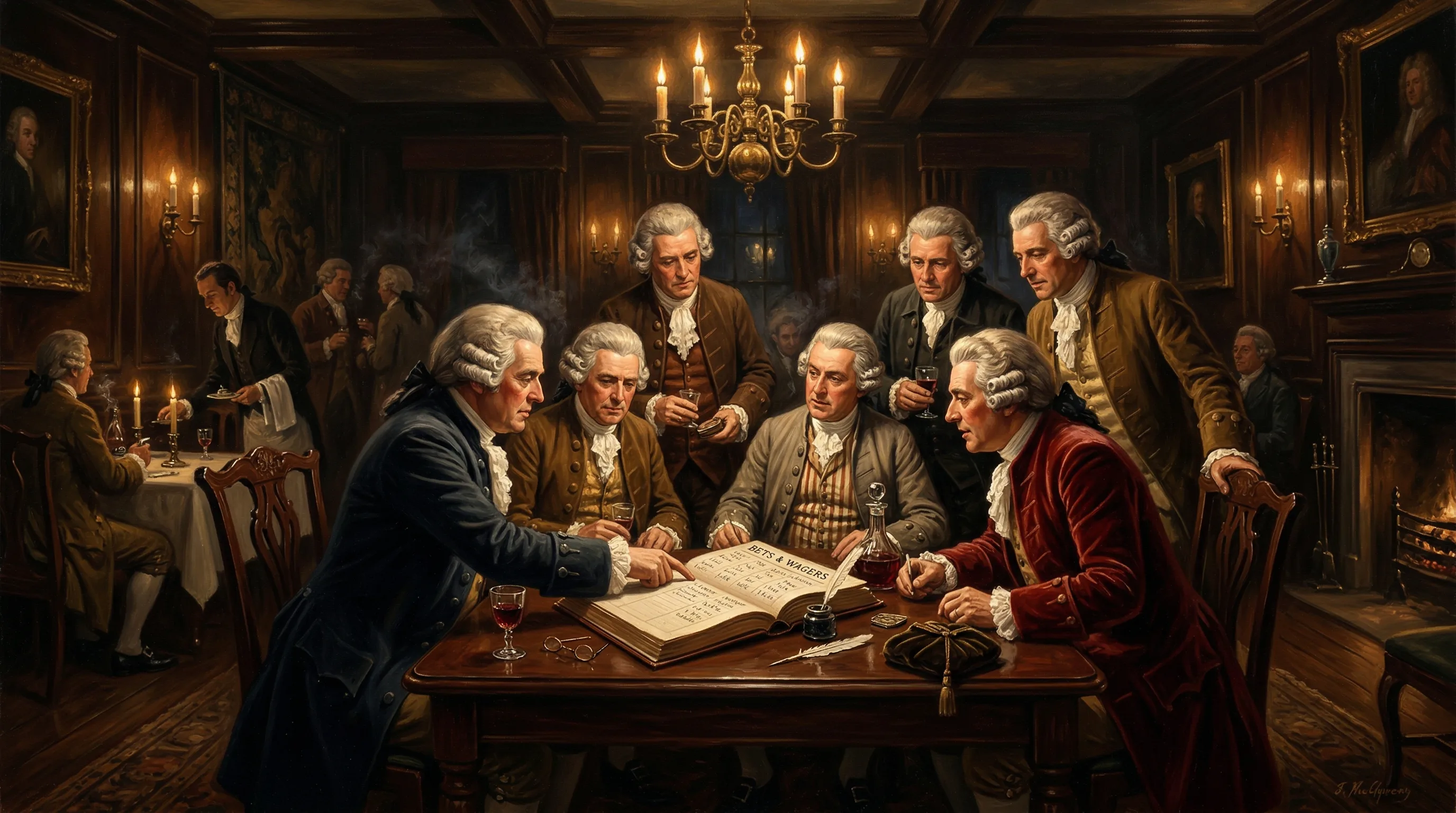
A Brief History of Gambling
· Updated March 2026
How did the Gaming Industry evolve in London's West End?
With a total of twenty eight casinos in and around central London and new ones appearing in out-of-town areas, it's easy to forget these days that the hub of London's casino scene remains around the exclusive Mayfair district.
Situated directly east of Park Lane this area first makes its mark on the psyche of the average UK citizen via the Monopoly board, on which Mayfair is the ultimate real estate goal. It's expensive, it's sophisticated and it's exclusive.
Factor in the close proximity of St James's with its world-class clutch of gentleman's clubs hailing back as far as the late 17th Century and it starts to make sense that people flock to this square mile of London to experience a level of play that they simply can't get anywhere else.
Does this mean that the West End of London is the only place in the capital with any kind of gaming history?
The answer is in fact a resounding 'No'. Exclusive gambling venues began operating in Mayfair around the 1820s, yet long before then high-stakes gambling was going on for hundreds, and even thousands of years.
Roman beginnings
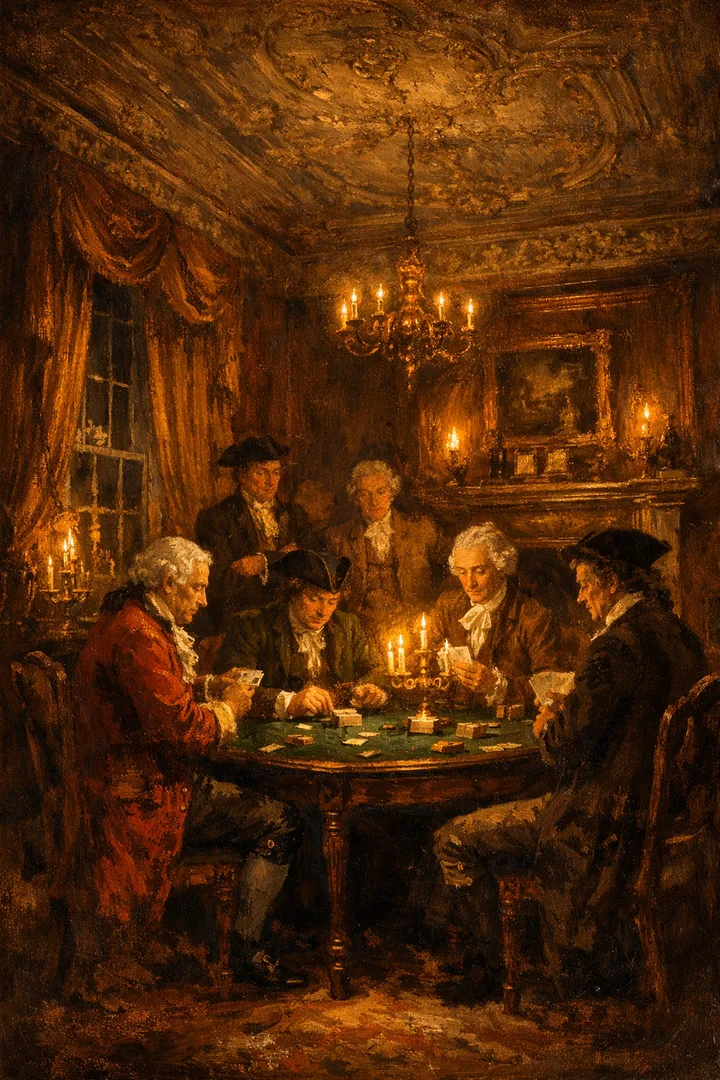
A quick look at London around the time of the Romans shows that the city walls didn't extend any further west than modern day Ludgate Circus, but this didn't stop Roman soldiers from having a flutter on what was essentially a game of Ludo.
This game evolved into a similar game named Tabula, which was the forerunner of modern Backgammon. It's played on a board with twenty four points, with two players moving fifteen pieces each according to the roll of three dice.
So: Next time you watch Monty Python's Life of Brian and discover what agricultural, mechanical, domestic and educational wonders the Romans actually did for us, remember they also provided the framework for a game that we still enjoy today.
The key attraction for Roman soldiers and anyone else who played was the idea of a race. A duel to get home first, with the dice rolls either speeding up your progress or allowing your opponent to 'hit' your pieces and force you to start again.
Interestingly, to the Romans gambling was viewed as a metaphor for life. Quite which aspect of life they don't say, though given that most Romans didn't survive past their mid-twenties, perhaps it was the extreme speed and risk of it all that hit home most.
The Middle Ages
So what came next? Namely the Middle Ages, the demise of the Roman Empire (but not Backgammon, obviously) and the rule of Richard the Lionheart.
The King wasn't too bothered about his populace descending into a jousting-driven spiral of addiction. He was, however, worried about his knights: Specifically that they would spend too much time playing dice and not enough time sharpening their swords. He subsequently introduced the first ever gambling law in 1190, restricting high stakes games to himself and his knights.
Moving forward to the Thirteenth Century, soldiers coming back from The Crusades didn't bring back just gold and scars: They also brought back a game called 'Hazard', which we now know as Craps.
It's hard to believe that a game so ingrained in American culture actually began in the Middle East over eight hundred years ago, yet this dice game's popularity exploded in London throughout the 13th Century.
Going back to the 14th and 15th centuries, however, things took a step backwards for while with coinage and board games essentially banned as the government tried to force its population to concentrate on more worthwhile pursuits like archery.
In all fairness, other types of gambling were also taking hold of London at the same time. Quoits - where players throw metal rings over a spike - and Gleeek, a popular card game of the time, were keeping the betting public happy.
Poker makes an appearance
Fast forward to the middle of the second millennium and Henry VIII was in power, faced with a serious French invasion threat and a populace that would rather play a game called 'Brag' than go to war.
Every schoolboy knows about this game, yet most are probably gleefully unaware of how old it is as a precursor to modern Poker. Using a deck of 32 cards, Brag is all about 'The Three' – the highest possible hand – and the fine art of bluffing.
The appeal is easy to understand: Betting rounds based on ranking hands are a great way to suck players into a game and generate some high octane drama.
This type of game is also not far off the kind of table poker seen in modern casinos today, though clearly things have become a lot more sophisticated over the following five hundred years.
Being the kind of guy who thought nothing of executing his wives after they upset him, the most notable thing about Henry VIII's attitude to gambling was his hypocrisy. He banned his subjects from playing games of chance but spent hours playing cards and dice himself, losing thousands of pounds in the process.
When Edward VI took over, dice and gambling games were legalised, though the clergy were not permitted to play. This period also saw the first national lottery in 1569, which was a huge success and helped fund several major public works.
With the restoration of the Monarchy, however, came a new broom and Charles II even had his own crown-appointed 'Groom Porter' whose job was to supervise and regulate all games of cards and dice within the Royal court.
The monarchy leads the way with a huge resurgence in gambling
King Charles Sir Thomas Neale was put in charge of ensuring all gambling dens met with existing legislation, as well as keeping a keen eye on the King's own personal betting activities.
Charles wasn't just pro-gambling: He loved it. He had a particular fondness for racing horses at Newmarket and even entered several races himself. This royal endorsement led to a huge resurgence in gambling across all social classes.
People now even started to place bets on sports and pub games, making the activity so popular that the government eventually had to step in and try to regulate it through the Gaming Act of 1710.
All interests that generate any level of controversy, though, have a habit of going in and out of fashion. By the early 19th Century, the government was again trying to crack down on gambling houses, though they were largely unsuccessful in Mayfair.
Crockfords: Still the UK's most notorious casino
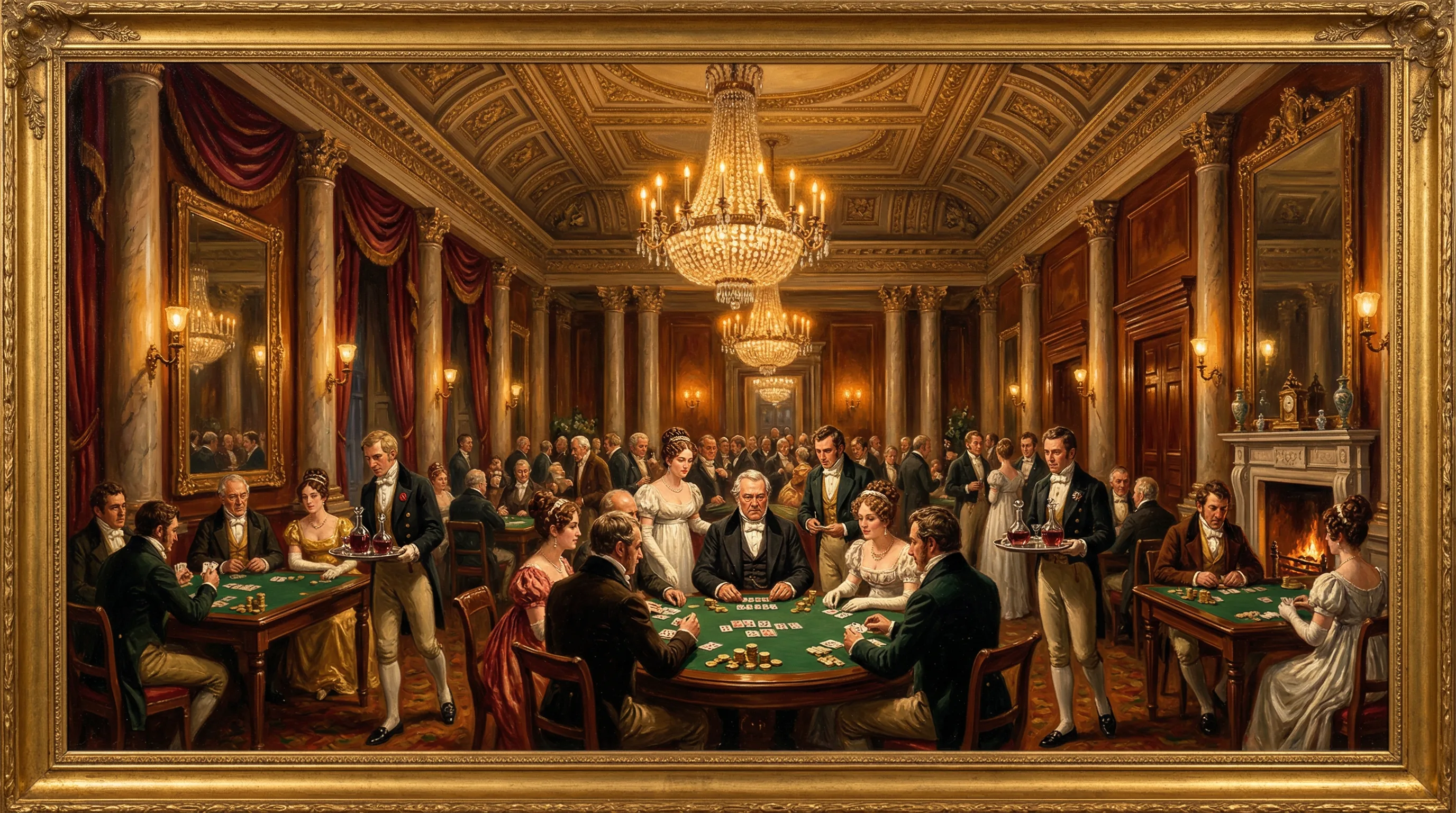
Known for its lavishness and opulence, this club still exists today under Genting's ownership. William Crockford, a former fishmonger, opened it in 1828 and it quickly became the talk of the town.
Crockfords' original incarnation primarily had the air of a gentleman's club – and being right in the heart of St James's, it attracted the wealthiest and most influential men in the country.
Ironically, though, Crockford himself wasn't one of the gang: The son of a fish merchant, he was extraordinarily good with probability and quickly worked out how to gain an edge at gambling in an era when regulation was less strict and there were loopholes that could be exploited. Crockford quickly made a large amount of cash and then turned the tables, opening his club knowing full well that he'd always have a statistical advantage over his clients.
Crockfords casino closed in 1845 and reopened exactly 100 years after it was launched. In 1928 the club unlocked its doors again, primarily as a venue to host bridge players - though Chemin de Fer, Roulette and Blackjack followed. It's now located at 30 Curzon Street, and if you don't want to attend in person you can gain access via Genting's online casino.
After Crockfords the West End casino industry's next shot in the arm was the 1960 Betting and Gaming Act. This was introduced to combat a growing underground betting industry that was avoiding tax and causing serious levels of criminal activity in the capital and throughout the UK.
Instead of being run exclusively by gangs the industry gained respectability and allowed gambling for small sums on games of skill like bridge. From 1961 betting shops started opening and until 1965 local magistrates issued over 16,000 licences.
The Aspinall years
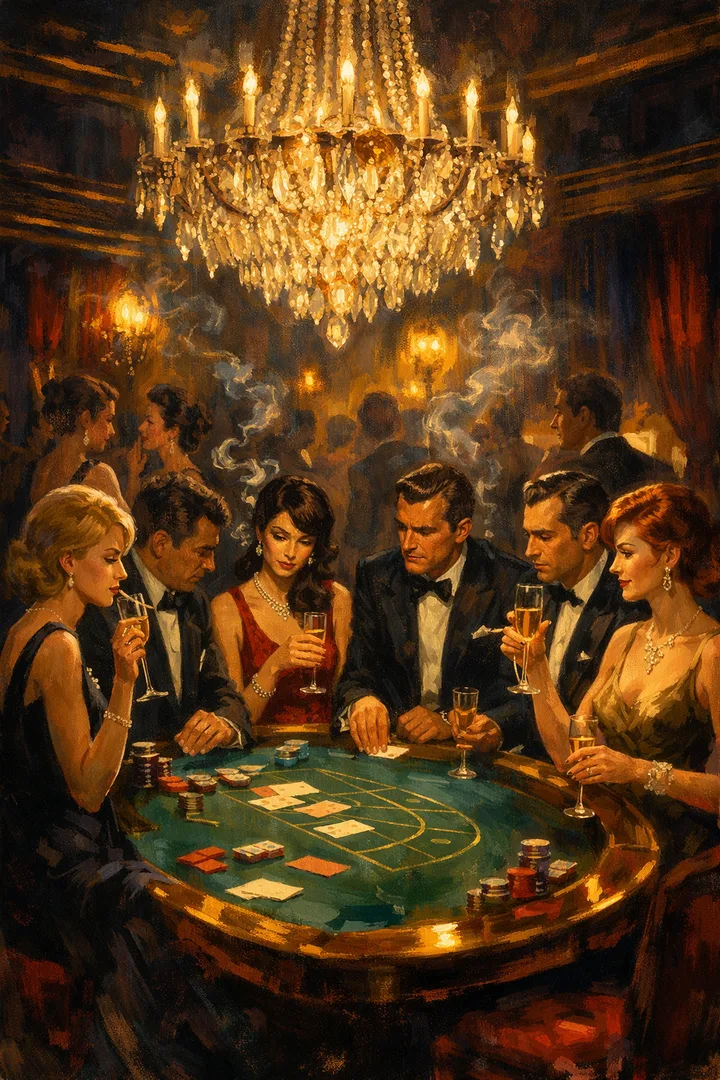
The biggest Mayfair name associated with this era was the infamous Clermont Club. Owner John Aspinall was born in Delhi during the British Raj era and cultivated a stereotypical casino player image in his early years, getting expelled from Rugby School for inattention, and then skipping his final exams at Oxford to attend the Gold Cup at Ascot - forfeiting his degree.
He then opened a bookmaker shop in the late 1950s, prior to the introduction of legal casino gambling, and attended illegal parties between going to the races – where he discovered that Chemin de Fer games were actually permitted and that the house could take a 5% rake, subject to rules on frequency. He then set up private parties of his own and provided the premises were never used more than three times for gambling the law was not broken.
His success with this venture actually led to the 1960 Act and he had to find other avenues to pursue his passion. In 1962 he opened the Clermont Club in Berkeley Square, which became a magnet for the rich and famous.
Aspinall was a charismatic individual, owning the legendary Howletts Zoo, living a dangerous and exotic life that only served to increase the appeal of his gaming establishments.
Nowadays the original club site is still prospering too, with a second club – simply named Aspinalls – located on Curzon Street and continuing to attract a high-end clientele.
The other big name in London's West End in the 1960s wasn't in Mayfair but in nearby Knightsbridge and it had a far more sinister reputation.
Gaming goes upmarket – and so do the Krays
Esmeralda's Barn was around in the 50's operating as a conventional nightclub – and owner Stefan de Faye soon realised that the real money was in gaming. He turned the venue into a casino and it became so successful that it attracted the attention of the Kray twins, who eventually took over the business.
Casino goers in the West End these days get a far more sanitised experience. Just as large corporations have taken over much of the hospitality industry, so too have they dominated the London gaming scene.
The Ritz Club is sited in the famous Ritz hotel on Piccadilly, and offers a no-holds barred luxury experience that remains one of the most exclusive in the world.
If this isn't exclusive enough for you there are various discreet salles privee as well – with a full range of games from American Roulette and Blackjack to Baccarat and Three Card Poker.
Other alternatives are the Palm Beach, Maxims or The Colony Club. These are all owned by Genting along with Crockfords, but each has its own distinct personality and target demographic.
Finally, the wonderful Les Ambassadeurs is not to be missed. It's got a fantastic view over Hyde Park and its own private garden, making it a truly unique place to play.
With half a dozen high end casinos in an area approximately one square mile in size, Mayfair still wears its crown as the premier gambling district in London – and based on its long and colourful history, that doesn't look set to change any time soon.